Force-Based Object Dimension Estimation in Practical Bin Picking Scenarios
Tristan Fogt, Louis Hardinghaus, Georg Siegemund, Timon Adler, Holger Kunz, Arne Glodde, Sina Rahlfs, Franz Dietrich
Technical University of Berlin and FORMHAND Automation GmbH
Annals of Scientific Society for Assembly, Handling and Industrial Robotics 2024 (MHI 2024) — Springer · 2024
Introduction
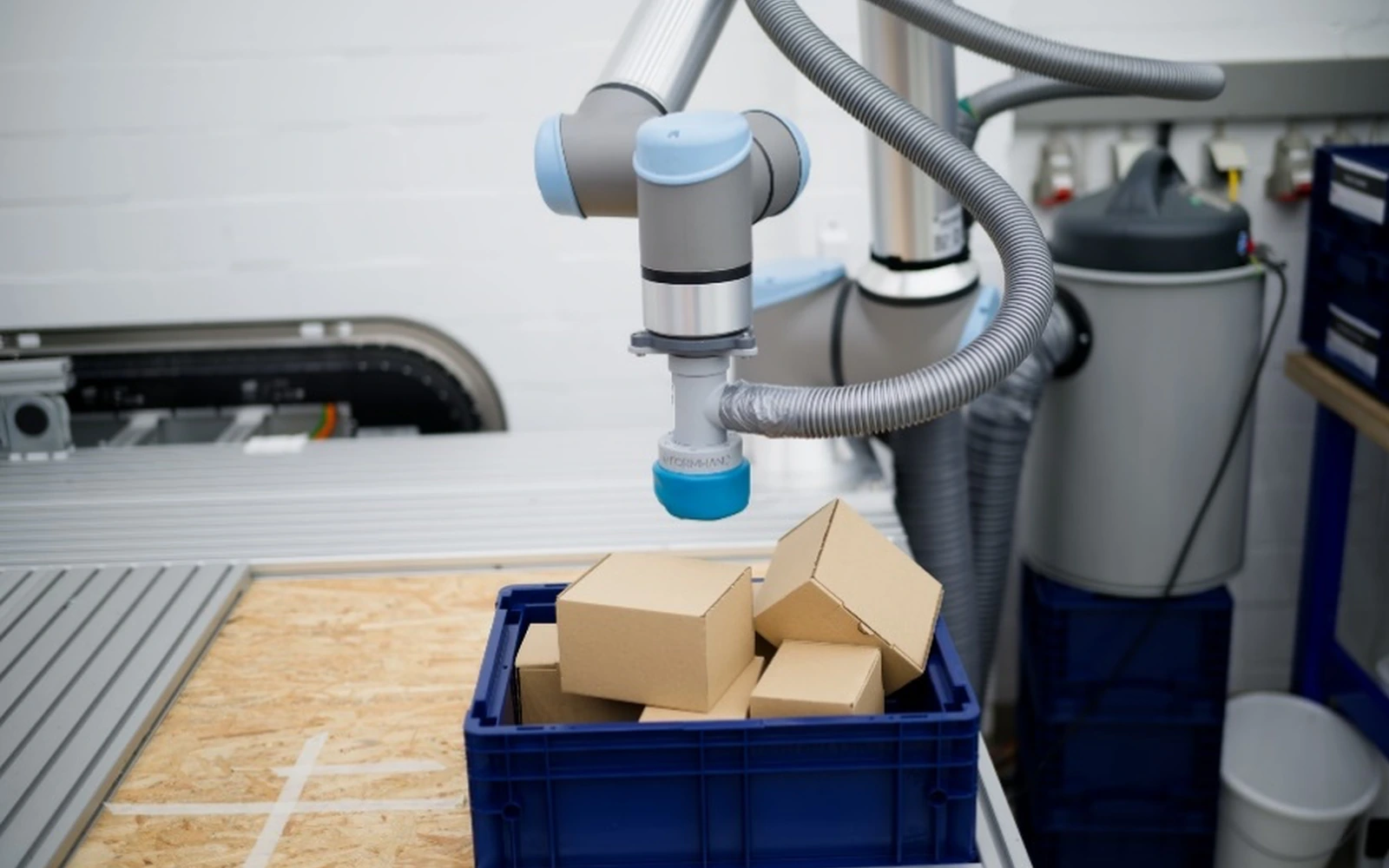
Bin-picking systems commonly rely on cameras to determine object geometry and pose. Camera-based systems can, however, introduce additional hardware, calibration, computational, and integration requirements.
This work investigates whether a robot can estimate the dimensions of a grasped object through physical interaction alone.
At a glance
A camera-less bin-picking system may successfully detect and grasp objects using force feedback but still lack information about the geometry of the object it is handling.
After grasping an object, the robot probes it against known surfaces and determines its bounding dimensions from robot position and force/torque feedback.
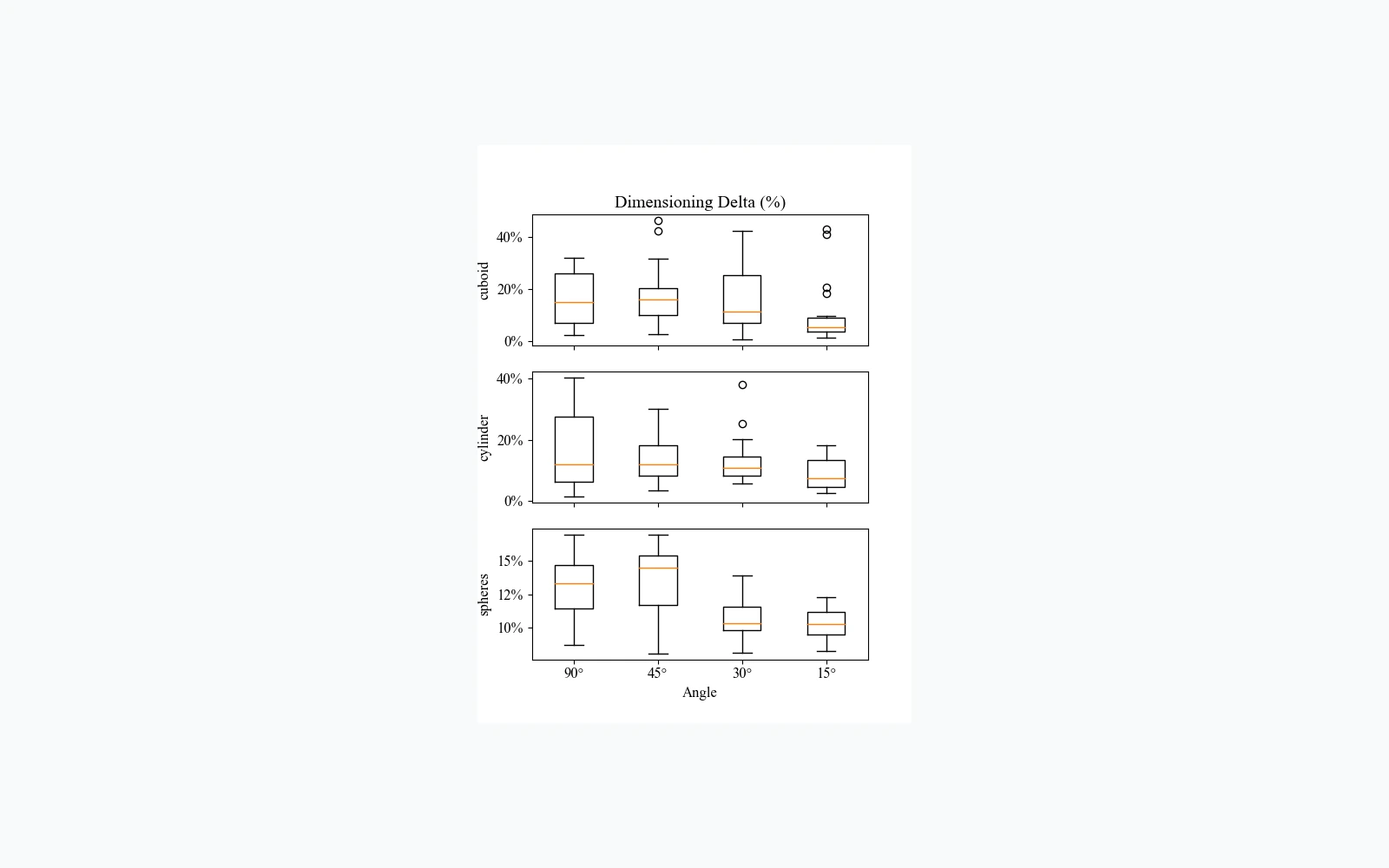
The method predicted object dimensions within approximately 8–18%, depending on object geometry and measurement increment.
Measuring without an additional camera
The method builds on the robot and force/torque sensing already present in a force-feedback bin-picking process, rather than adding a dedicated vision system.
The grasped object itself is used as a probe against known references in the environment.
Determining the bounding dimensions
After an object is removed from the bin, the robot lowers it toward the work surface to determine one dimension, then moves it toward the bin edge to determine the remaining dimensions.
The robot then rotates the object and repeats the measurement; the resulting readings are combined into an estimate of the object's bounding box.
Accuracy versus process time
The study evaluated 90°, 45°, 30°, and 15° rotation increments. Smaller increments can provide a tighter estimate but require more probing operations and therefore increase process time.
Measured process time ranged from roughly 18 seconds for the 90° strategy to approximately 55 seconds for the 15° strategy.
Evaluation with different geometries
The approach was evaluated on three practical object groups — cardboard boxes, cans, and tennis balls — testing it across clearly different object shapes.
Practical relevance
The approach is less precise than dedicated vision-based dimensional measurement, but it obtains additional geometric information without adding another sensing system.
This is particularly relevant for camera-less or sensor-minimal bin-picking concepts, where every additional sensor adds cost, calibration effort, and integration complexity.
Figures

Citation
Fogt, T., Hardinghaus, L., Siegemund, G., Adler, T., Kunz, H., Glodde, A., Rahlfs, S., & Dietrich, F. (2024). Force-Based Object Dimension Estimation in Practical Bin Picking Scenarios. In Annals of Scientific Society for Assembly, Handling and Industrial Robotics 2024 (MHI 2024). Springer. Published online 2026.
Related projects
Interested in a research collaboration?
Get in touch to discuss joint research, data collection, or applied evaluation of new methods.